


GRYD Radiance - LED Light Therapy Face Mask
GRYD Radiance - LED Light Therapy Face Mask
Firmer, brighter-looking skin, built over weeks, not promised overnight.
Less than the cost of 2-3 salon LED sessions. Yours to use at home, for years.
Visible results with consistent use: firmer, smoother, more even-looking skin
Genuine 630nm red LEDs (102 of them): not tinted plastic over standard bulbs
Flexible silicone, under 200g: contours to your face, no rigid shell
10 minutes, 3–5 times a week: relax, read or work while you wear it
7 modes, 5 intensity levels: start gentle and build up as your skin adjusts
Couldn't load pickup availability
Try it for 60 days. If it’s not for you, send it back. Covered by a 2-year warranty and UK-based support.
- Apple pay payment method
- Google pay payment method
- Shopify pay payment method
- Klarna payment method
- Visa payment method
- Master payment method
- Paypal payment method
- American express payment method
- Discover payment method

GRYD Radiance - LED Light Therapy Face Mask
-

"This is a really great quality mask. It arrived in great condition and was nicely packaged. Easy and clear instructions and quick set up. Used for 2 weeks in a row and my skin is visibly better. Less breakouts and reduced redness, skin also looks smoother"
-

"I had high expectations, but it exceeded them all. A practical, comfortable and lightweight product. Perfect for use in bed but also while doing other things around the house. I've been using it for 4 weeks and I'm already noticing an improvement in my skin, much more firm and radiant."
-

"I find it great, it's much better than the one I bought previously which was made of plastic and was rigid. This one is soft and comfortable. I wear it while watching TV or working on the computer."


What's Included?
What's Included?
GRYD Radiance Mask · Neck Attachment (if selected) · Remote Control · USB Charging Cable · Quick-Start Guide
Key Features
Key Features
True Red Light Therapy 630nm red LEDs - a wavelength studied for supporting collagen production and skin tone. Real light, engineered to the correct spectrum, not a coloured filter over white LEDs.
7 Light Modes: Red (630nm), Blue (460nm), Green (520nm), plus four combination modes - so you can adjust for redness, congestion, or general skin renewal.
70 LEDs (Face) / 102 Chips (incl. Neck): Densely arranged for even coverage across the whole face, without cold spots.
Flexible Silicone Build: Moulds gently to your face shape, keeping light close to the skin instead of gapping at the cheeks and jaw.
5-Level Intensity Control: Adjust brightness to your comfort level and skin sensitivity.
Cordless & Rechargeable: 1200mAh battery, full charge in 3–5 hours. No wires to manage mid-session.
Lightweight, 200g: Light enough to wear while sitting up, moving around, or doing something else entirely.
Delivery & Returns
Delivery & Returns
Delivery: We offer free tracked delivery on all orders. Orders arrive within 4–9 days. For full details, refer to Shipping Policy.
Returns: Items can be returned within 60 days of delivery if unused and in original condition. For more, please review our Return & Refund Policy.


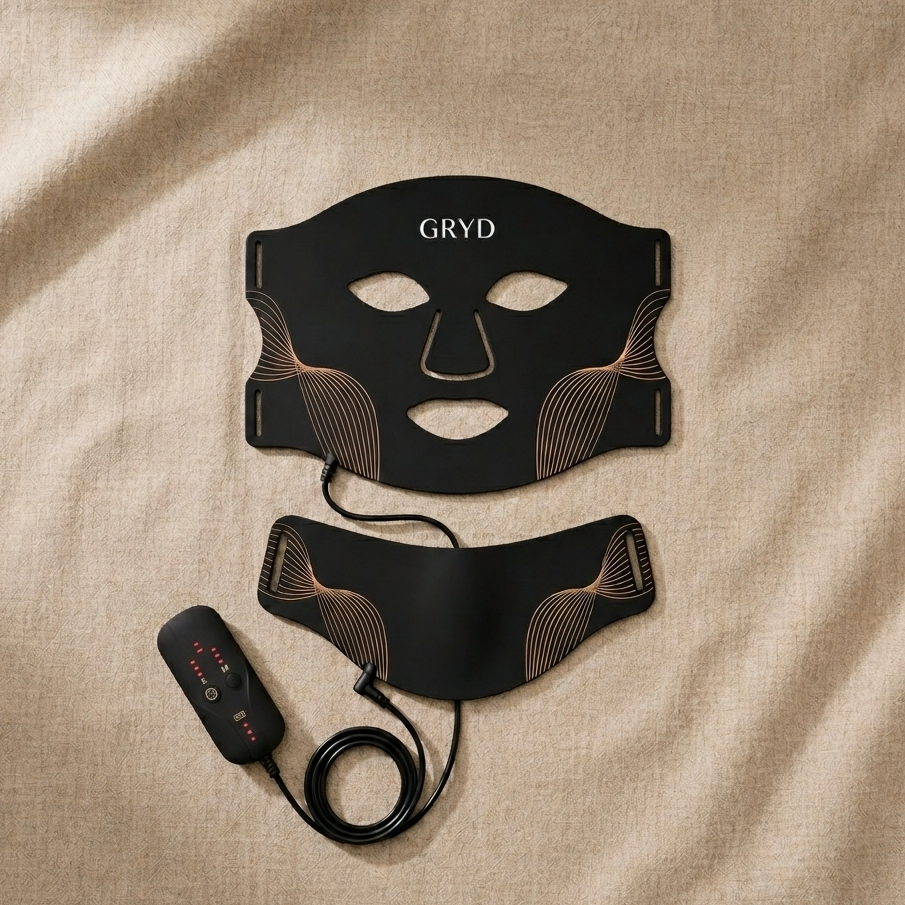

How GRYD Radiance Works
GRYD Radiance uses real 630nm red light - studied for supporting collagen and cell repair. It's absorbed by skin cells, giving them energy to work more efficiently, showing up over time as firmer, more even-looking skin.
Blue light targets congestion, green light balances oil - so you can switch modes to match what your skin needs.
Unlike masks with tinted plastic over standard LEDs, GRYD Radiance uses genuine light at the correct wavelength - so it actually reaches your skin. Want the detail? [See Independent Research below behind 630nm red light]
Collapsible content
Safety & Precautions
Safety & Precautions
GRYD Radiance uses LED light - it does not emit UV rays and does not generate heat in the way skin-damaging light sources do. The mask is designed for comfortable, everyday wear, with five intensity settings so you can find what's right for your skin.
A few things to keep in mind:
- Do not use the mask while it is charging.
- Discontinue use and consult a doctor if you experience unusual irritation.
- Not recommended for use during pregnancy, or if you are taking photosensitising medication, without first speaking to your doctor.
- This device is intended for cosmetic and wellness use and is not intended to diagnose, treat, cure, or prevent any disease.
Independent Research
Independent Research
Avci et al. (2013), Seminars in Cutaneous Medicine and Surgery - A widely cited review of low-level laser and LED light therapy, examining its role in stimulating skin repair and supporting collagen-related processes.
Barolet, Roberge & Auger (2009), Journal of Investigative Dermatology - A laboratory study examining how pulsed 660nm LED light influences collagen metabolism in skin cells.
Ngoc, Moon & Lee (2023), Photodermatology, Photoimmunology & Photomedicine - A systematic review and meta-analysis evaluating the use of LEDs across a range of skin therapy applications.
Barolet, Christiaens & Hamblin (2016), Journal of Photochemistry and Photobiology B - A review exploring how red and near-infrared light interacts with skin tissue.
How to Use GRYD Radiance
-

Step 1: Cleanse
Start with a clean, dry face. Removing makeup, oil, and skincare product first allows the light to reach your skin without interference.
-

Step 2: Select Your Mode
Put on the mask and choose your light mode and intensity. New to light therapy? Start with red light on a lower setting and build up as your skin adjusts.
-

Step 3: Relax for 10 Minutes
Your 10 minutes. Sit back, read, or simply switch off while the mask works. Use it 3–5 times a week. Consistency matters more than intensity, so make it part of your evening.


What Consistent Use Looks Like
-

8 weeks in, using red light 4x a week - visibly firmer, more even-looking skin.
-

6 weeks of consistent use - smoother-looking skin texture, calmer overall tone
-

5 weeks of consistent use - reduced redness, calmer skin tone
-

7 weeks of use - brighter, more radiant-looking complexion.
-

6 weeks in, alternating red and blue modes


Compare before you buy
How GRYD Radiance compares
The same core technology as the leading premium masks, with more control over your treatment.
60 days to decide. And a 2-year warranty if anything goes wrong.
Frequently Asked Questions
How long before I see results?
How long before I see results?
Most customers notice a visible difference in skin tone and texture within 3–6 weeks of consistent use, 3–5 times per week. Photobiomodulation works cumulatively, so results build gradually rather than overnight.
Do I need eye protection?
Do I need eye protection?
The mask is designed with eye cut-outs so you can keep your eyes shielded comfortably during use.
Will it fit my face?
Will it fit my face?
GRYD Radiance is made from flexible silicone, so it bends to follow the shape of your face instead of being a rigid shell your face has to fit. It weighs under 200g, so it sits lightly while you relax, read or work. If it doesn't feel right, you have 60 days to return it.
Is it suitable for sensitive skin?
Is it suitable for sensitive skin?
GRYD Radiance operates at a gentle, non-heating intensity with five adjustable levels, so you can start low and build up. As with any new addition to your routine, discontinue use and speak to a dermatologist if you experience irritation.
What happens if it stops working?
What happens if it stops working?
Every GRYD Radiance mask comes with a 2-year warranty against faults. If anything stops working as it should, email info@grydworld.com (Monday to Friday, 9am–5pm), and we'll arrange a repair or replacement. We reply within 24–48 hours.
Why does GRYD Radiance cost more than some other masks?
Why does GRYD Radiance cost more than some other masks?
Cheaper masks often use tinted casings over standard LEDs rather than true light at the correct wavelength - meaning the light may look right but doesn't do what red light therapy is intended to do. GRYD Radiance is built around genuine, correctly-calibrated LEDs, a flexible fit that keeps light close to the skin, and a battery designed for regular, long-term use - not a single season.
How often should I use GRYD Radiance?
How often should I use GRYD Radiance?
10 minutes a day, or every other day, works well for most skin types. Consistency is more important than frequency - regular short sessions outperform occasional long ones.
Is this a substitute for professional treatment?
Is this a substitute for professional treatment?
GRYD Radiance is a wellness device that operates clinical-grade light therapy intended to support your skincare routine. It's not intended to diagnose, treat, or cure any medical condition. If you have a specific skin concern, please consult a dermatologist.
How do I clean and store it?
How do I clean and store it?
Wipe the silicone surface gently with a soft, dry or slightly damp cloth after use. Avoid submerging the mask or charging it while damp.